Installments
How to keep track of installment payments, from car to phone
A car installment, a phone on a payment plan, and furniture spread over a year. Each one is clear on its own, but together it's hard to know how much you still owe, when each one ends, and how much of your salary they really take.
Keeping track of installments doesn't take complicated software. It takes four pieces of information for each one and a single place to keep them. Then you can answer the question that matters most: how much of my salary is left after installments?
What to record for each installment
- Monthly payment: the amount actually charged each month.
- Due day: so you know when the money leaves your account.
- Total payments and how many you've made: so you know how many are left.
- The lender: the bank, finance company, or store, so you know whom to contact about early payoff or any questions.
Work out what's left and the total cost
From those details you get three key numbers. Here's an example with sample amounts:
| Installment | Monthly payment | Paid / total | Left | Remaining balance |
|---|---|---|---|---|
| Car | KWD 180.000 | 22 / 60 | 38 payments | KWD 6,840.000 |
| Phone | KWD 25.000 | 10 / 24 | 14 payments | KWD 350.000 |
| Furniture | KWD 40.000 | 9 / 12 | 3 payments | KWD 120.000 |
| Total | KWD 245.000 | KWD 7,310.000 |
- Remaining = payments left × payment amount. The car: 38 × 180 = KWD 6,840.
- Total cost = total payments × payment amount. The car: 60 × 180 = KWD 10,800. Compare that with the cash price to see what the financing costs you.
- Cost per year = payment × 12. All three installments together: 245 × 12 = KWD 2,940 a year.
Line up the due dates
If your installments are charged on different days, list them in the order they come out. The one charged a few days before payday is the most likely to hit a nearly empty account. If possible, ask the lender to move the due date to right after your salary arrives.
When an installment ends, don't let its amount disappear into everyday spending. Move it to savings that same month; you're already used to living without it.
How much of your salary do installments take?
Divide your total monthly installments by your salary. In the example above, with a salary of KWD 900: 245 ÷ 900 = 27.2% of your salary goes to installments alone, before rent, bills, and subscriptions. That leaves KWD 655 for everything else.
There's no single percentage that fits everyone, but knowing this number helps with two decisions: can you take on a new installment right now, and which one is worth paying off early if you have extra money? For the full picture, read how to split your salary and monthly budget.
Track your installments in Mastoora
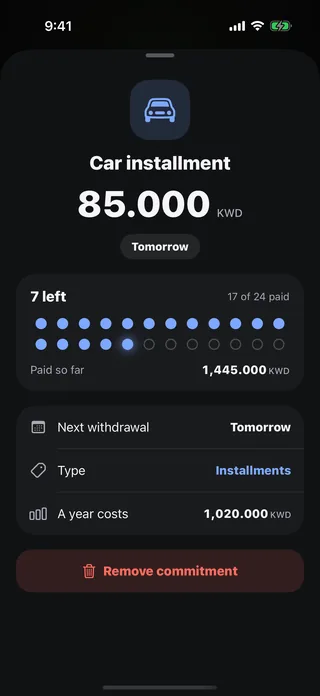
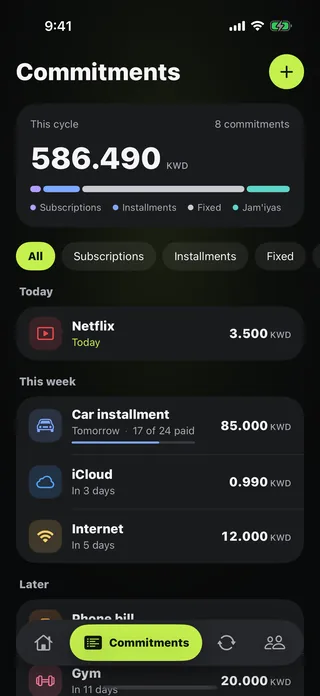
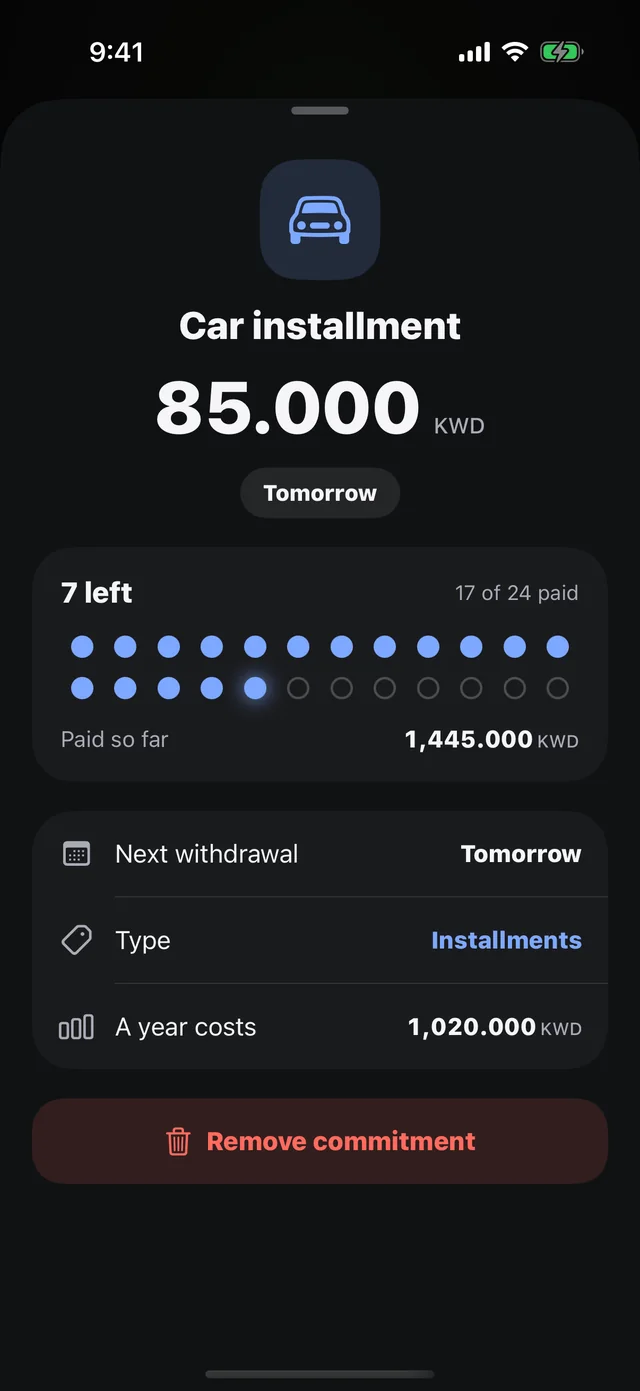
Mastoora is an iPhone app where you add each installment to Commitments by name, amount, and due day, including smaller Tabby and Tamara plans (covered in buy now, pay later installments). For each installment you see:
- Payments left and what you've paid so far.
- What the installment costs per year.
- A 10 a.m. notification the day before every withdrawal.
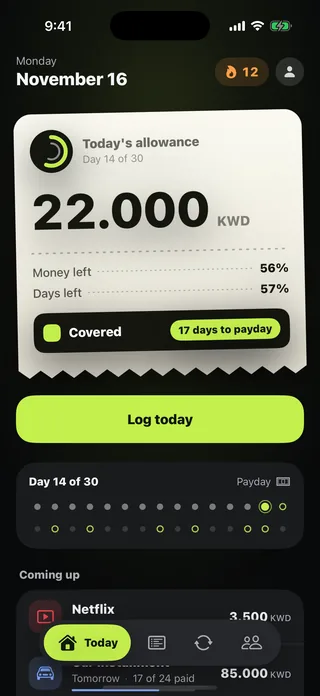
- The month's total comes out of your salary to show your real "Today's allowance" until payday.
Your numbers stay on your device, and Mastoora never asks for your bank login. Read our privacy policy.

Try Mastoora free
Add your commitments once, and Mastoora tells you every day what you can spend.
Download on the App StoreThis article is general information, not financial advice.
Frequently asked questions
How do I know how much is left on my installment?+
Multiply the payments left by the payment amount, for example 38 × KWD 180 = KWD 6,840. For an exact early payoff figure, ask your lender.
How do I calculate what share of my salary goes to installments?+
Divide your total monthly installments by your salary and multiply by 100. For example, 245 ÷ 900 = 27.2%.
Is there an app to keep track of installments?+
Yes. In Mastoora you add each installment with its amount and due day, and you see payments left, what you've paid so far, and a reminder before every withdrawal.
Does Mastoora pull my installments from my bank?+
No, it doesn't connect to any bank. You add your installments once yourself, and the data stays on your device.