Salary & budget
Personal monthly budget: how to build one and stick to it
A monthly budget isn't a complicated spreadsheet. It's a clear answer to one question: where does the money come from, and where does it go? Here's how to build one in four parts, with a simple template in Kuwaiti dinars.
The best budget is the one you can stick to. So start with your real numbers from last month, not ideal ones you wish you could hit.
The four parts of a budget
- Income: the net salary that reaches your account, plus any other steady income.
- Fixed commitments: rent, installments, bills, subscriptions, and jam'iya shares.
- Savings: a fixed amount you move on payday before any spending.
- Variable spending: groceries, gas, restaurants, shopping, and everything that changes month to month.
A simple monthly budget template
| Item | Type | Amount (KWD) |
|---|---|---|
| Net salary | Income | 1,100.000 |
| Rent | Fixed | 300.000 |
| Car installment | Fixed | 140.000 |
| Bills (electricity, internet, phone) | Fixed | 50.000 |
| Subscriptions | Fixed | 30.000 |
| Savings (10%) | Savings | 110.000 |
| Groceries | Variable | 150.000 |
| Gas | Variable | 40.000 |
| Dining and coffee | Variable | 120.000 |
| Personal spending | Variable | 80.000 |
| Buffer for small surprises | Variable | 80.000 |
The math: 520 fixed, 110 savings, and 470 variable, for a total of exactly 1,100 KWD. Every dinar has a job, which is what's called a zero-based budget: income minus spending and savings equals zero.
Why a payday-to-payday month beats the calendar month
If your salary arrives on the 25th, a budget from the 1st to the 30th doesn't match your reality: you spend half the calendar month from one paycheck and the other half from the next. It's clearer to start your money month on payday and end it the day before the next one.
- You know exactly how many days the money has to last.
- Commitments fall inside the right cycle, so no installment surprises you at the end.
- You can compare each cycle with the last one fairly.
This idea is the basis of Mastoora's payday cycle, explained in detail in the payday-to-payday budget.
Review your budget every cycle
A budget isn't something you write once. At the end of each cycle, take ten minutes and ask: which line did I go over? Which line didn't I fully need? Then adjust the next cycle's numbers based on what actually happened.
Don't forget yearly costs like insurance renewal, school fees, or travel. Divide each by 12 and set that amount aside every month: a 600 KWD yearly expense means 50 KWD each cycle.
If you go over the same line three cycles in a row, the problem is usually the number, not you. Raise it and lower another line.
Your monthly budget in Mastoora
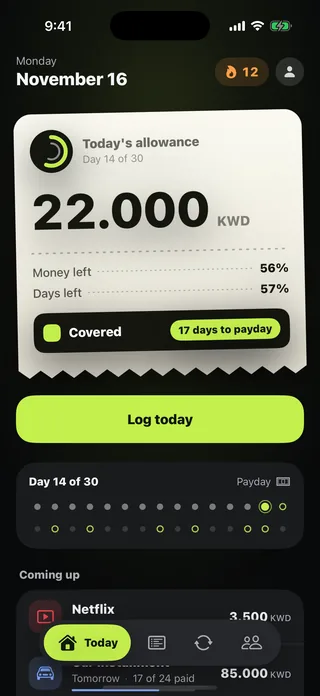
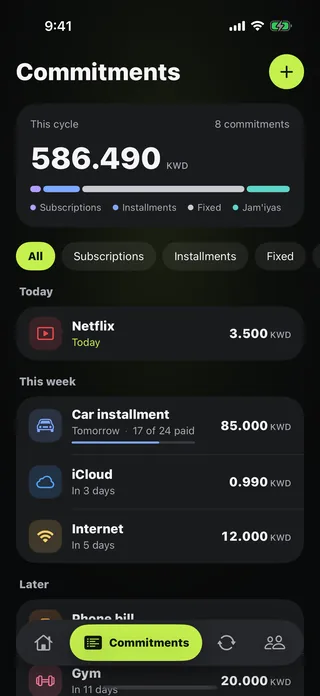
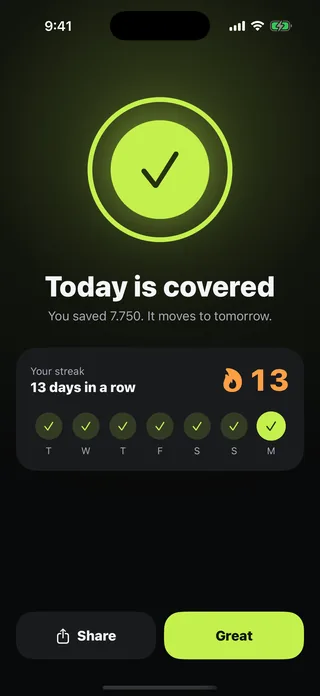
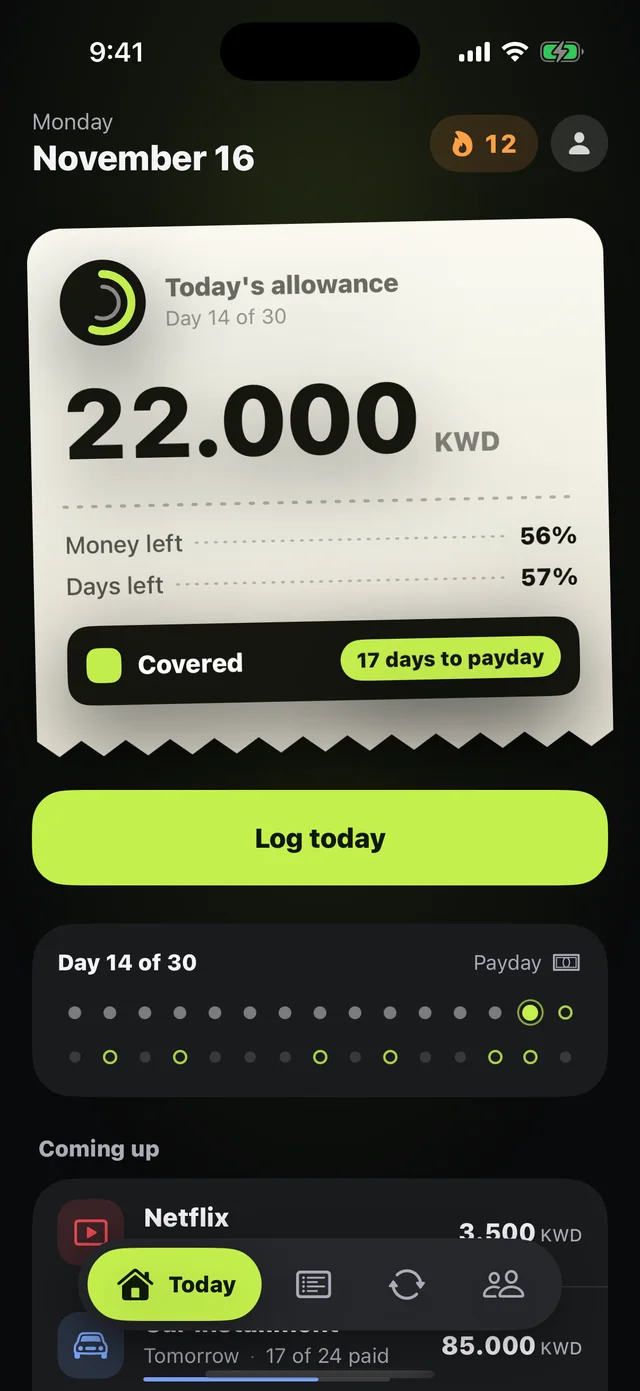
Instead of a spreadsheet you update by hand, in Mastoora you set your salary and payday, then add your commitments in Commitments. A new cycle starts automatically on payday, and the app divides what's left by the days and gives you "Today's allowance" with your status: Covered, On the edge, or Exposed.

Try Mastoora free
Add your commitments once, and Mastoora tells you every day what you can spend.
Download on the App StoreThis article is general information, not financial advice.
Frequently asked questions
What's the best way to make a monthly budget?+
Start with last month's real numbers, then order your spending: commitments, savings, then variable. For percentages, try the 50/30/20 rule.
Do I need to log every purchase?+
No. Knowing your daily total and comparing it with a daily number is enough for most people.
What if my payday changes?+
Adjust the start of your cycle. In Mastoora, you can change your payday in Settings any month it moves.