Salary & budget
How to save money from your paycheck: 6 tactics that work
Saving from your salary doesn't mean living on bread and water. It means changing the order you spend in and seeing the money that slips away unnoticed. Here are six practical tactics to start with your next paycheck.
Most lost savings don't go to big purchases. They go to small, repeated amounts: a subscription you don't use, a delivery order on a tired night, a quick buy you didn't think about. These tactics target exactly that.
1. Move your savings on payday
Don't wait for the end of the month to see what's left. Move your savings to a separate account the day your salary arrives, and treat it as a commitment like rent. What you can't see in your checking account is hard to spend.
2. Audit your subscriptions
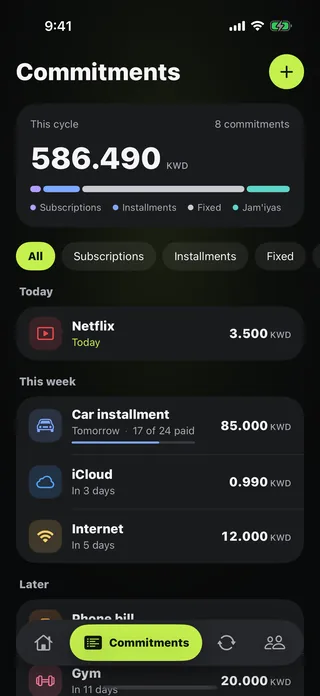
List every subscription charged to your card: streaming, music, storage, apps, and the gym. Then ask of each one: did I use it this month? Cancel what you don't use, and read how to cancel subscriptions on iPhone for the steps.
3. The 24-hour rule before you buy
For any nonessential purchase above an amount you set for yourself, say 20 KWD, wait 24 hours. Put it in the cart and leave the decision for tomorrow. Many wants fade after a day, and the ones that stay are usually worth it.
4. Track your daily total
You don't need to log every receipt. It's enough to know how much you spent today in total and compare it with a set daily number. That simple check alone makes you notice the days your spending runs high.
5. Small daily savings add up
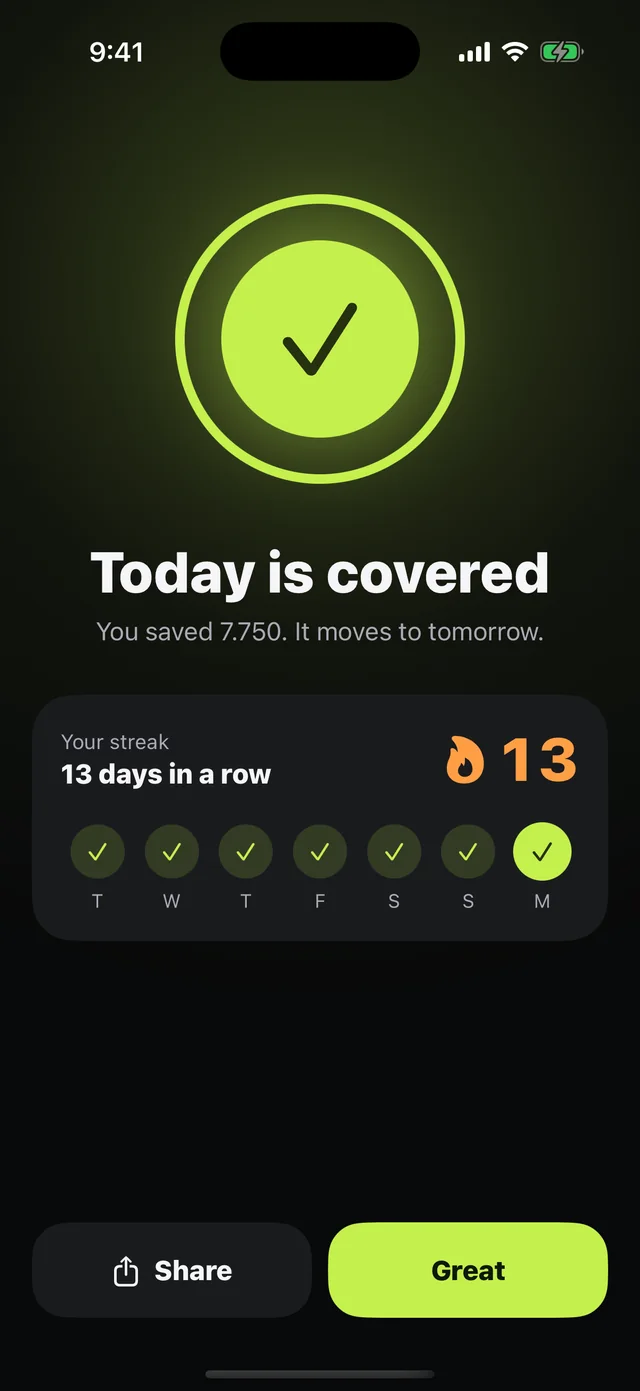
If your daily allowance is 10 KWD and you spend 8, those 2 KWD aren't lost. Roll them to tomorrow, and tomorrow's allowance becomes 12. That small reward makes saving feel real instead of distant.
6. A jam'iya as forced saving
A jam'iya is one of the oldest ways to save in the Gulf: a group where everyone pays a fixed amount each month and one member takes the total in turn. Its strength is that your share is a commitment to others, so you don't postpone it the way you might postpone saving alone. Read the jam'iya guide to start one with a clear order.
Start with just one or two tactics this month, like saving on payday and auditing subscriptions, then add more.
How Mastoora helps you save
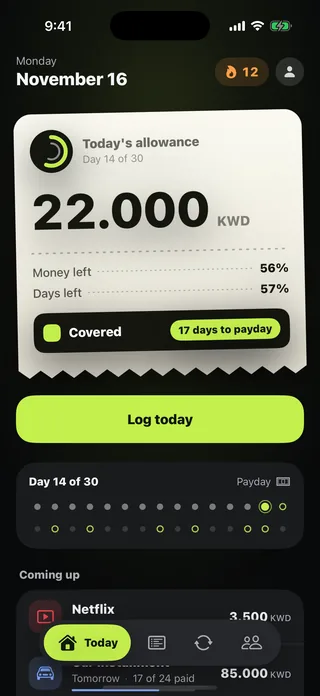
- It takes your commitments out of your salary and gives you "Today's allowance" until your next payday.
- You log your day's total at night with "Log today" in seconds, or tap "Spent nothing."
- What you save moves to tomorrow, and what you overspend comes off it.
- You organize your jam'iya with "Start a jam'iya," and its share counts in your allowance. Mastoora never holds or moves money.

Try Mastoora free
Add your commitments once, and Mastoora tells you every day what you can spend.
Download on the App StoreThis article is general information, not financial advice.
Frequently asked questions
How much of my paycheck should I save each month?+
10% is a good start for most people; raise it as your commitments shrink. What matters most is keeping it steady every month.
Is a jam'iya better than saving in a bank?+
A jam'iya helps you stay consistent because your share is owed to others, but it doesn't grow your money. Many people use both.
How can I save on a small salary?+
Start with a small fixed amount on payday, and focus on stopping leaks: unused subscriptions and impulse buys.